Wastewater treatment uses a wide variety of chemical agents, which can be broadly classified into the following major categories based on their functions and mechanisms of action:
1. Coagulants & Flocculants
This is the most important and most widely used category of chemicals in wastewater treatment. They are primarily used to remove suspended solids (SS), colloidal particles, and some organic matter from water.
- Mechanism of Action: By neutralizing the charge on particle surfaces (coagulation) and causing the destabilized particles to aggregate into larger flocs (flocculation), thereby accelerating solid-liquid separation processes such as sedimentation or flotation.
- Main Types:
- Inorganic Coagulants:
- Aluminum Salts: Such as aluminum sulfate and alum. Polyaluminum chloride (PAC) is currently the most widely used inorganic polymer flocculant, offering advantages such as a wide applicable pH range (5-9), rapid floc formation, and low corrosivity.
- Iron Salts: Such as ferric chloride, ferrous sulfate, and polyferric sulfate (PFS). Flocs formed by iron salts are dense and settle quickly, performing well in treating low-temperature, high-turbidity water, but are more corrosive.
- Organic Flocculants:
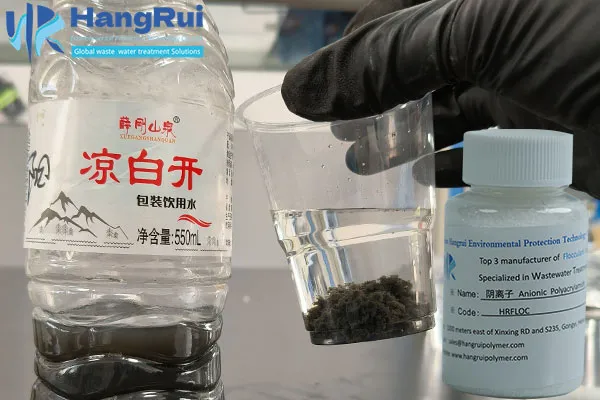
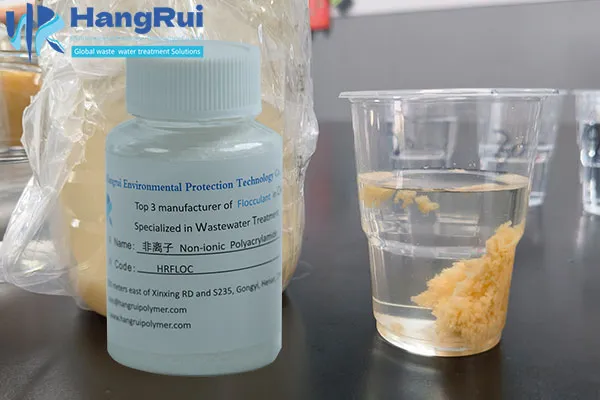
- Polyacrylamide (PAM) : This is the most commonly used organic polymer flocculant, available in anionic, cationic, and non-ionic forms. It is particularly effective in the sludge dewatering stage. Regarding your earlier question about coffee wastewater, if PAM is needed, the anionic type is typically chosen.
- Natural Polymer Flocculants:
- Sources: Such as chitosan, modified starch, and plant gums. These agents are non-toxic, readily biodegradable, and produce less sludge. Research shows that natural coagulants like moringa seeds and aloe vera have significant effects on coffee wastewater treatment.
- Inorganic Coagulants:
2. pH Adjusters
- Mechanism of Action: Adjust the pH of wastewater to neutral levels or to the specific range required by a particular process through neutralization reactions. Many biological treatment processes (e.g., activated sludge) and chemical reactions (e.g., coagulation) require specific pH conditions to operate efficiently.
- Main Types:
- Alkaline Agents: Commonly used ones include lime (calcium hydroxide), caustic soda (sodium hydroxide), and soda ash (sodium carbonate).
- Acidic Agents: Commonly used ones include sulfuric acid and hydrochloric acid.
3. Disinfectants & Biocides
- Mechanism of Action: Kill pathogenic microorganisms (e.g., bacteria, viruses) in wastewater to prevent disease transmission, and control microbial growth in the treatment system to inhibit the formation of biological slime.
- Main Types:
- Oxidizing Disinfectants: Such as chlorine gas, sodium hypochlorite, chlorine dioxide, and ozone. This is the most common disinfection method in wastewater treatment, using strong oxidation to destroy microbial cell structures.
- Non-oxidizing Biocides: Such as quaternary ammonium salts, glutaraldehyde, and dithiocyanate methane. These agents kill microorganisms through toxic effects and are commonly used to control bacterial and algal growth in recirculating cooling water systems.
4. Other Functional Chemicals
| Category | Main Function | Common Examples |
|---|---|---|
| Corrosion Inhibitors | Form a protective film on metal surfaces to prevent or slow down corrosion of treatment equipment, pipelines, and recirculating water systems. | Phosphates, molybdates, zinc salts, organic phosphonates (e.g., HEDP, ATMP). |
| Scale Inhibitors | Prevent calcium, magnesium, and other hardness ions in water from forming scale on pipes and heat exchanger surfaces through chelation, dispersion, and other mechanisms. | Organic phosphonates, polyacrylic acid and its copolymers. |
| Complexing Agents / Heavy Metal Precipitants | React with heavy metal ions (e.g., copper, lead, mercury, cadmium) in wastewater to form insoluble precipitates, thereby removing them. | Organic sulfur compounds (e.g., TMT-15), xanthates, etc. |
| Defoamers / Antifoaming Agents | Eliminate or suppress excessive foam generated during treatment processes such as aeration and mixing, preventing foam overflow that could affect operations and aeration efficiency. | Polyethers, silicones, polyether-modified silicones, etc. |
| Oxidizing & Reducing Agents | Used to treat specific pollutants like cyanides or sulfides, converting them into non-toxic or easily removable substances through oxidation or reduction reactions. | Oxidants: Chlorine-based oxidants, hydrogen peroxide, ozone, etc.; Reductants: Ferrous sulfate, sodium bisulfite, etc. |
| Adsorbents | Utilize their porous, high-surface-area structure to physically or chemically adsorb dissolved organic matter, heavy metal ions, color, etc., from wastewater. | Activated carbon (powdered or granular), zeolite, resins, etc. Using agricultural waste to prepare adsorbents is a research hotspot in recent years. |
| Sludge Dewatering Agents | Improve the dewaterability of sludge, releasing bound water to facilitate mechanical dewatering, thereby reducing sludge volume. | Primarily cationic polyacrylamide (CPAM), sometimes used in combination with inorganic coagulants. |
Summary: The selection of wastewater treatment chemicals is a systematic engineering task that must be determined based on specific water quality characteristics, treatment objectives (e.g., discharge compliance, reuse), process flow, and cost budgets. In practice, multiple chemicals are often used in combination to achieve optimal treatment performance and economic efficiency.