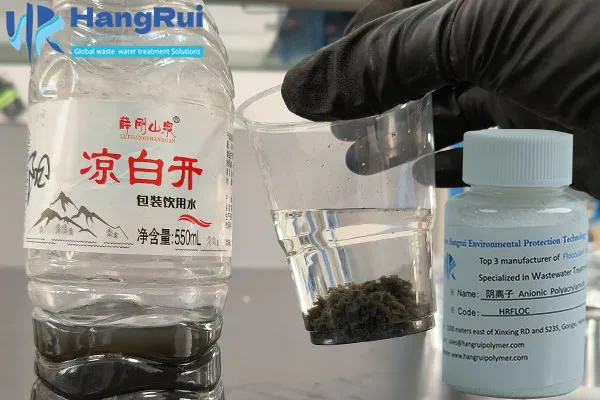
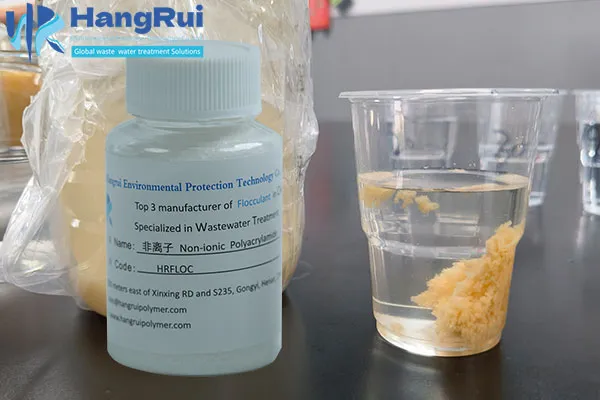
Papermaking wastewater is not a single stream. It is divided into white water from the wire section, intermediate wastewater, bleaching wastewater, combined wastewater, biochemical effluent and papermaking sludge dewatering according to production sections. This article focuses on the application of Polyacrylamide flocculant in the purification of papermaking wastewater, exploring the underlying mechanisms, performance data, and recent technological advancements.
1. Paper Machine White Water (Wire Pit White Water, Disc Filter)
White water is drained from the wire section of the paper machine. It mainly contains fine fibers, calcium carbonate/talcum fillers and a small amount of starch additives. It features high suspended solids and moderate COD, and is the highest-priority stream for water recycling.
- PAM selection: Medium cationic CPAM with medium high molecular weight, usually used together with PAC.
- Dosing points: Inlet pipe of multi-disc filter, front of white water pit, inlet pipe of air flotation unit.
- On-site goal: Capture fine fibers and fillers. The clarified liquid can be recycled directly for stock preparation, pulp dilution and wire showering, cutting fresh water consumption and fiber loss.
- Operation notes: White water quality fluctuates with paper grades. When producing corrugated board, linerboard or cultural paper, filler dosage changes, so the cationicity and dosing rate of PAM need fine adjustment. Switching filler from calcium carbonate to talcum often results in fragile flocs, requiring on-site jar tests.
- Common problems: Under-dosed PAM leads to turbid filtrate and fiber loss; overdosing creates sticky flocs that clog the filter cloth of disc filters and reduce filtration efficiency.
2. Pulping Intermediate Wastewater
This stream comes from cooking and washing processes, rich in lignin, hemicellulose and fine pulp residues. It is yellowish-brown with high COD, high suspended solids and abundant colloids, harder to settle than white water.
- PAM selection: Medium-to-high cationic CPAM, normally dosed after PAC.
- Dosing points: Inlet pipe of primary sedimentation tank, front of cavitation air flotation / shallow air flotation.
- On-site goal: Remove most suspended solids and partial colloidal COD to reduce the organic load of downstream biochemical tanks.
- Operation notes: Water quality fluctuates sharply during startup, shutdown and pulp washing. Plants usually keep 2–3 CPAM samples of different cationicity for emergency use. Light flocs that tend to float are a typical issue for intermediate wastewater.


3. Bleaching Wastewater
Bleaching wastewater has strong color, residual bleaching agents and chlorinated organics. It is corrosive with frequent pH swings.
- PAM selection: High cationic CPAM. Some workflows add a decolorant first before PAC and PAM.
- Note: Bleaching wastewater is rarely recycled directly after flocculation. It is normally pretreated and then blended into combined wastewater for biochemical treatment.
- Pain point: Residual oxidants degrade PAM and weaken flocculation. Flocs become small under the same dosage. Most mills install equalization tanks to stabilize water quality and consume residual chlorine before chemical dosing.
4. Combined Wastewater
Combined Wastewater (Before Biochemical Treatment / Advanced Treatment after Biochemical Process)
Combined wastewater is the mixture of all section streams after the equalization tank, the largest wastewater stream in paper mills.
- Pre-treatment before biochemistry: PAC + CPAM to remove suspended solids and protect the biochemical system.
- Advanced treatment of secondary effluent: Further reduce COD and turbidity for discharge standards or water reuse. Water quality is relatively stable with few colloids. Medium-low cationic CPAM is commonly used; anionic PAM works as coagulant aid in a small number of low-colloid cases.
- Reuse scenario: Treated clean water can be used for floor washing and circulating cooling water. Some streams go through sand filtration and ultrafiltration before returning to production.
5. Papermaking Sludge Dewatering (Mixed Physicochemical and Biochemical Sludge)
Sludge dewatering accounts for the largest PAM consumption and is prone to on-site failures.
- Sludge composition: Air flotation scum, primary sludge (fiber-rich) mixed with waste activated sludge (sticky and microbe-rich). They are blended in sludge conditioning tanks.
- PAM selection matched with dewatering equipment:
- Belt filter press: Medium cationic CPAM. Flocs should be loose and non-sticky. Sticky flocs adhere firmly to filter cloth, block pores and shorten cloth service life.
- Centrifuge: High cationic CPAM. Flocs must be strong and shear-resistant. High shear force inside centrifuges breaks weak flocs and causes turbid centrate and sludge leakage.
- Plate-and-frame filter press: CPAM with relatively high cationicity to form compact cake and lower moisture content.
- Target: Control filter cake moisture at 72%–78% for outward transportation, incineration or co-firing in biomass boilers.
- Operation pain points:
- Sludge with high fiber content is loose and easier to dewater. A higher proportion of biochemical sludge drastically increases viscosity and PAM consumption.
- Operators often over-dose PAM chasing large flocs, but the flocs trap free water instead of releasing it, resulting in wetter cake and higher chemical cost.
- Strict requirements for PAM preparation: Prepare 0.1%–0.2% solution; water temperature ≤40 ℃. Prepare fresh solution daily; performance drops obviously after 24 hours. Rapid powder feeding forms insoluble fish-eyes that clog dosing pumps and pipelines.
6. Special Working Conditions for Specialty Paper / Deinked Paper Mills
Deinked pulp (DIP) wastewater contains ink particles, ink colloids and surfactants, which make flocculation more difficult.
- PAM selection: High cationic CPAM, sometimes with dedicated decolorants.
- Features: Surfactants inhibit flocculation and produce smaller flocs. Independent jar tests are required instead of copying dosing recipes for ordinary wastepaper mills. Ink flocs tend to float, so air flotation is preferred over sedimentation.
7. General On-site Operation Guidelines
- Dosing sequence: PAC first with fast mixing, then PAM with slow mixing. Do not add them together.
- Jar test routine: When water quality fluctuates heavily, take raw water samples and test CPAM grades with different cationicity. Check floc size, settling speed, supernatant clarity and floc texture.
- Storage: Solid PAM must be kept dry. Moisture causes caking, poor solubility and reduced performance. Flush chemical pipelines regularly to avoid blockage from residual polymer gel.
- Mills focusing on water reuse prioritize PAM application in white water recovery. Recovering fibers at the front end lowers downstream wastewater load and overall chemical cost.